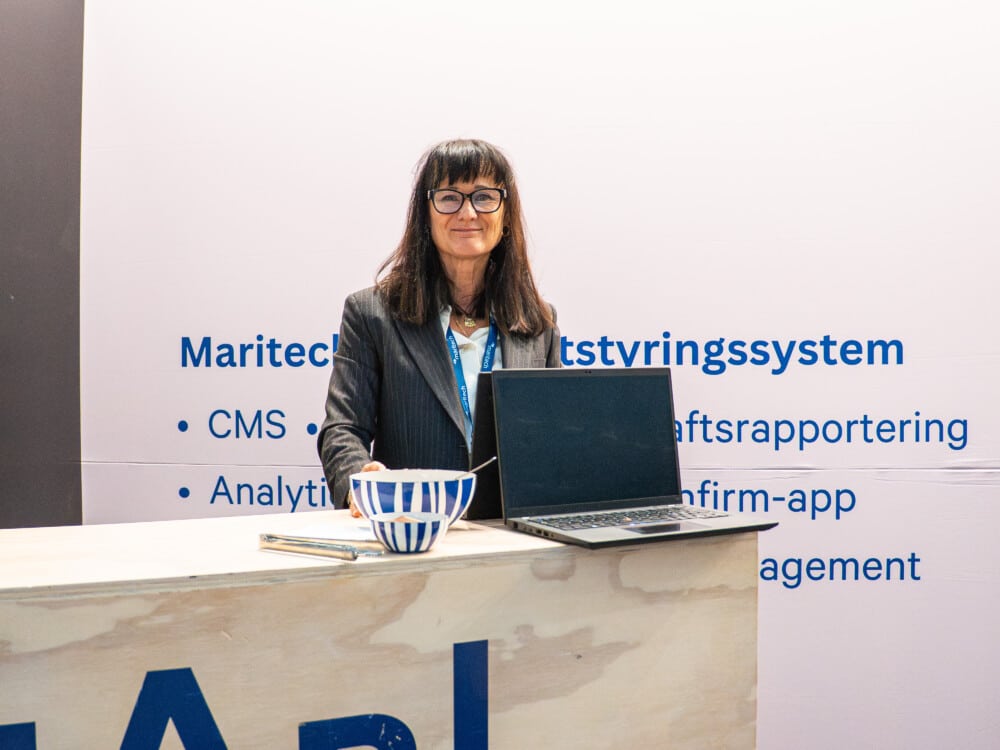
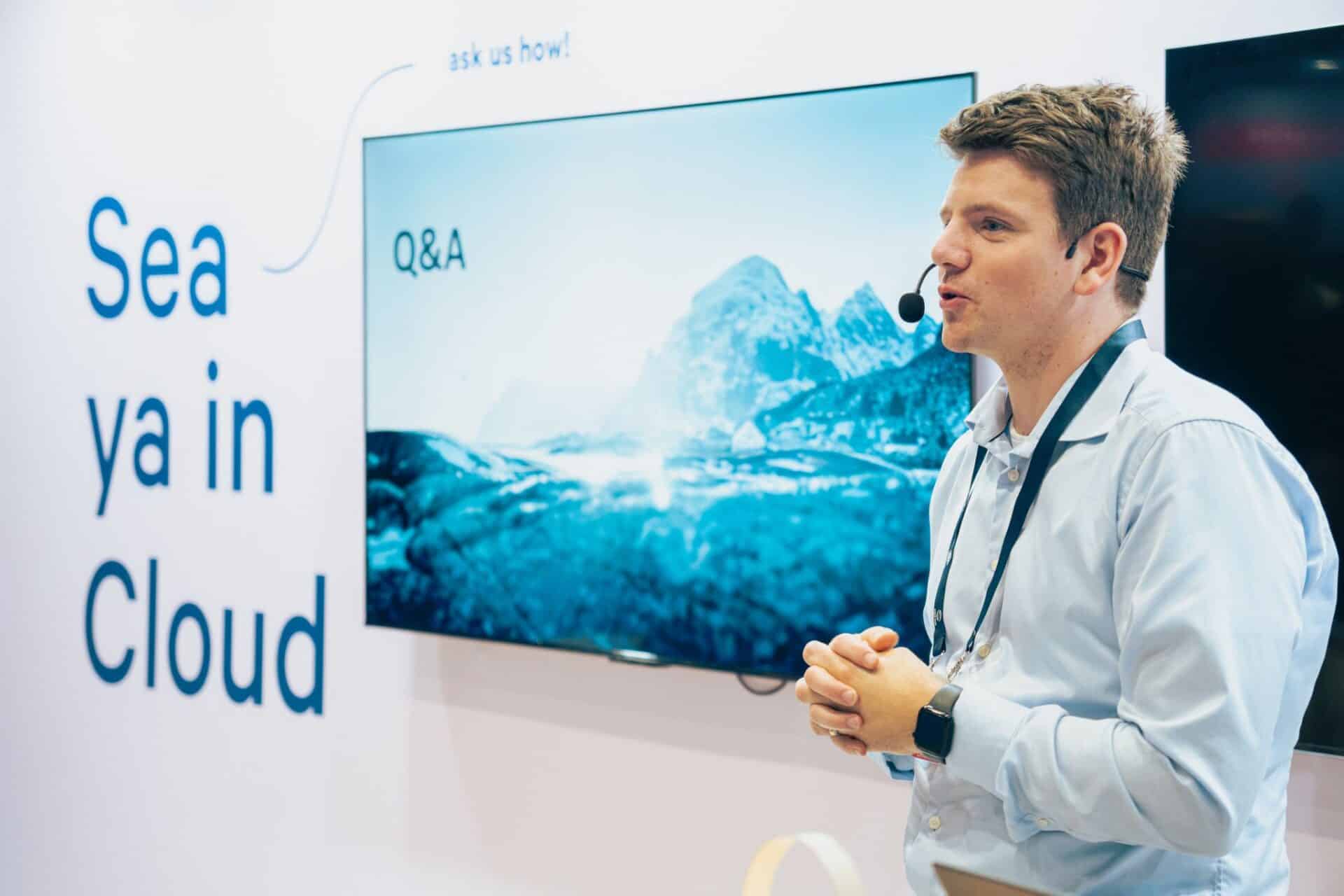
At Logistikkdagen 2026 in Åndalsnes, Marius Monsås Svenungsen, Product Manager at CAI | Maritech, shared our perspective on AI in the logistics industry. Here are the key ideas from the talk, for those who couldn't be there.
Nobody knows where AI is heading. The gap is real.
Predictions about AI range from "everything changes" to "it's overhyped." Both the pace and the direction are uncertain. What is certain is that there is a big gap between what language models can do today and what most companies actually use them for.
For any company, AI investment has to pay off in one of two ways: more growth, lower costs, or both.
Two paths for AI initiatives
Path 1: Make each employee more productive. Give people better tools, such as a chat assistant, while the processes stay the same. It is easy to roll out, but the ceiling is human capacity.
Path 2: Redesign processes around AI. Change how the work is done so AI can do more of it. It is demanding, takes time and carries more uncertainty, but the potential is far greater.
It's not either/or.
You instruct, Claude uses the systems
Today, an employee types data into a TMS through a browser. Going forward, the employee instructs an AI assistant, which uses the systems on their behalf. Inside Maritech, the people who use AI the most already work this way: they start the task in Claude and pull data from other systems along the way.
The processes in your TMS, CMS and WMS still apply, and the human stays in control. You review the result in the familiar screen and fix small errors before anything moves on. What changes is how much of the routine work you do by hand:
- Lower threshold, faster registration. You still need to understand how the system works, but the AI works out how the data should be registered and fills it in.
- Data across systems without an integration project. The AI pulls from several systems in one task, instead of you copying between screens.
- An assistant that learns how you work. You give it context about your processes, so it knows both what is in the systems and how you want the work done.
What is MCP, and how is it different from EDI and APIs?
MCP is an open standard that lets AI assistants use your systems. The system describes what the AI can do, one connection works for all AI assistants, and the AI gets the same access rights as the user.
A simple way to think about it:
- EDI is like a standard form sent in the mail. Fixed messages in a shared format, best for orders and invoices between partners.
- API is like an assembly line. A fixed recipe built by a developer, best for stable connections between two systems.
- MCP is like a new colleague. The AI decides what to do, best for varied tasks that cut across systems.
MCP doesn't replace EDI or APIs. It builds on top of them. Use an API when the flow is known and happens often, and MCP when the task varies.
Three examples from everyday logistics
A typical order moves through receiving, planning, securing capacity, driver communication, documents, customs and invoicing, with customer communication throughout. Most of these steps are done manually today, and many suit AI agents well. We showed three:
- Email to order. The AI reads the incoming email, extracts customer, pick-up and delivery, goods and date, checks the customer and agreed price in the TMS, creates the order and replies with the order number. You review it in the TMS.
- Planning an order on a vehicle. The AI finds orders without a vehicle, checks your own fleet, requests quotes from carriers by email and portals, compares price, timing and capacity, and puts the best option ready in the TMS. You approve the carrier.
- Customs clearance. The AI reads invoice, packing list and proof of origin, classifies the goods, calculates duties and VAT, fills in the declaration in the CMS and handles responses. You check before submission. Over time, customs clearance could become close to fully automated.
Who is most exposed, and who will succeed?
LLMs don't change the physical side of logistics, but they change the knowledge side. The more of your value that lies in information and coordination, the greater the exposure. Terminals and warehouses get better planning. Carriers get help with route planning, booking and paperwork. Freight forwarders, whose value lies in knowledge, networks and documents, see the biggest shift.
The companies that succeed will be those that change how they work. That takes three things together: process understanding, technology understanding and change leadership. Process understanding matters most. Size matters too: small companies can miss out on the scale benefits, while large groups struggle to bring the whole organization along.
It is also worth being honest about the outcome. If you succeed, you need fewer people for the same work, and many people get a new job: making AI work as well as possible.
Open questions
- Buy or build? Which technology do you buy from a vendor like Maritech, and what do you build yourself? If everyone buys the same, there is no competitive advantage.
- What stays constant? AI develops quickly, but a general model will never know your business. It is the world's best colleague, but it needs training for each task. Your data and context, and how you use them over time, will be decisive.
Nobody has the answer yet, including us. The change will be gradual, not overnight. A good starting point is to go back to what logistics is really about: moving goods from A to B, on behalf of others, at the right time and quality, as cheaply as possible. Start from that goal, not from how the process is done today.
Coming next: four deep dives
This post is the overview. Over the coming weeks we will publish four follow-up posts that go deeper into parts of the talk:
- EDI, API or MCP? What the difference is, and when to use which.
- Three everyday logistics tasks AI can take on. Email to order, planning an order on a vehicle, and customs clearance.
- Who is most exposed, and who will succeed? Terminals, carriers and freight forwarders, and the competence it takes.
- Two paths for AI in logistics. Better tools for each employee, or processes redesigned around AI.
Want to explore what AI could mean for your TMS, CMS or WMS workflows? Get in touch with the Maritech team, and follow us to catch the next four posts.