
How Manufacturers Succeed with Advanced Planning and Scheduling: 6 Lessons

From the CAI PlanetTogether team.
Ask a room full of manufacturers who has rebuilt a finished production plan by the very next morning, and nearly every hand goes up. It’s one of the most honest signals in manufacturing: the plan is rarely the problem — the ability to adapt it is. Most manufacturers are ready for smarter scheduling. Far fewer are ready for what it actually takes to get there.
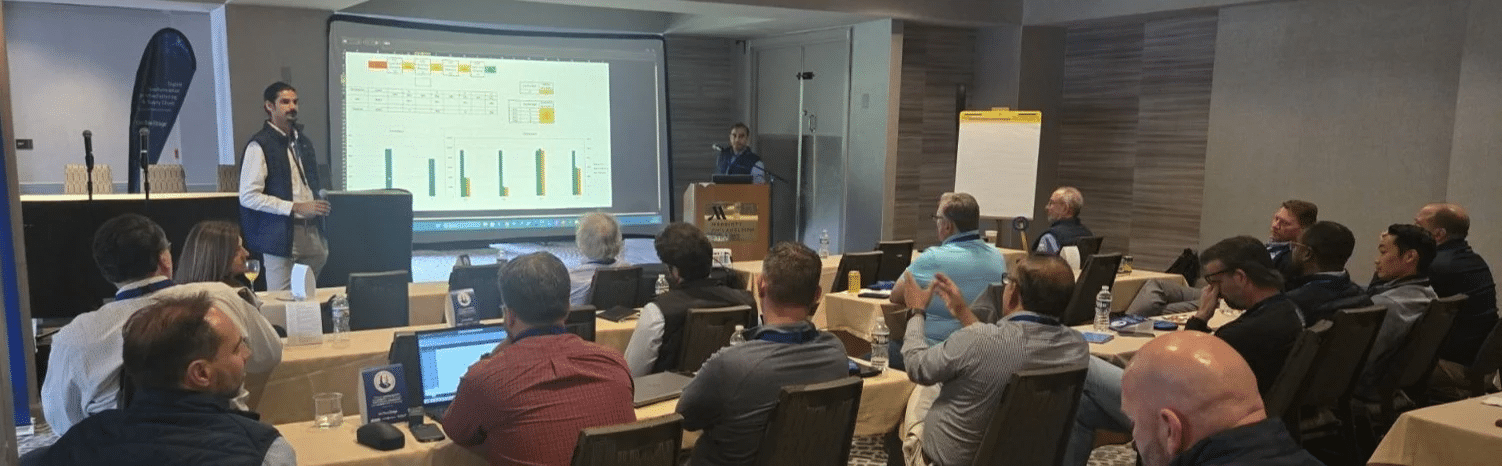
These six lessons came out of the annual Manufacturing Scheduling Summit, where APS, MES, and supply chain planning vendors sat alongside manufacturers who run advanced scheduling every day. The value wasn’t in any single session — it was in how consistently the same themes surfaced across very different plants and industries. Those recurring patterns are what follow, and they hold up regardless of which system you run or where you are on the journey.
What Is CAI PlanetTogether?
CAI PlanetTogether is advanced planning and scheduling (APS) software that helps manufacturers turn fragmented data and manual spreadsheets into a single, reliable production schedule. It sits between the systems you already run — coordinating capacity and sequencing across ERP, which owns orders and materials, and MES, which tracks real-time execution on the floor.
CAI PlanetTogether is part of CAI Software, whose portfolio of purpose-built operations software is focused on one outcome: helping manufacturers accelerate performance across their operations. That means APS doesn’t have to stand alone. CAI PlanetTogether connects into a broader ecosystem and integrates with leading ERP, MES, and supply chain platforms — including Kinaxis, NetSuite, AVEVA, Shiftboard, John Galt, and Aptean Ross — so scheduling improvements compound across the systems a plant already depends on.
The Six Foundations of a Successful APS Project
Across every conversation, the same six foundations separated the manufacturers seeing real results from the ones stuck in place:
- Data integrity — trustworthy inputs
- Process definition — the real process, not the documented one
- Data integration — knowing which system owns which truth
- Cultural resistance — the human side of change
- Continuous improvement — readiness as a habit, not a milestone
- KPI alignment — leadership and the floor measuring the same thing
Before the lessons, it helps to name what APS is actually for.
What APS Delivers: Visibility, Velocity, and Confidence
Good advanced planning and scheduling delivers three things to every operation:
- Visibility into real capacity — where the bottlenecks sit and how jobs move across machines.
- Velocity of response — a shorter gap between a disruption and the reschedule that answers it.
- Confidence in the plan — trust in the system, and trust between the planning office and the shop floor.
Balancing the three is a constant discipline. Too rigid and you lose flexibility; too fluid and you lose stability. The teams that find the balance are the ones that move scheduling from chaos to control.
Lesson 1 — Data Integrity: The Mirror No One Likes at First
APS doesn’t fix your data. It exposes it — and that’s usually where the hard work starts. One manufacturer found routing times inflated by 60x, all traced to a single unit mismatch. Another uncovered 15% of hidden capacity simply by documenting the small gaps left by setup, clean-in-place, and post-processing.
The real question isn’t whether the data exists. It’s who owns it. Does the truth live in the ERP, in spreadsheets, or in a planner’s head? Until that ownership is settled, APS can only mirror the confusion back at you. For many teams, it’s the first honest reflection they’ve had in years.
Lesson 2 — Process Definition: The Story Behind the Numbers
Every plant runs two processes: the one written in the SOP binder and the one that actually happens on the floor. APS forces those two versions to meet in the open. A documented 30-minute changeover that really takes an hour shows up immediately. A blending step that outruns downstream packaging leaves operators standing with nothing to run.
Some mismatches are subtler. When jobs start before the scheduler officially releases them, a team may assume the new system is broken — when in fact the floor has been working ahead of the process for years.
When data and process drift apart, schedulers improvise. One of the clearest tells is negative inventory entries in the ERP. That’s not sabotage; it’s survival — the workaround schedulers use to keep production moving when physical material lands before the paperwork does. APS surfaces those patterns so they can be fixed instead of repeated.
Lesson 3 — Data Integration: Finding the Real Home of Your Data
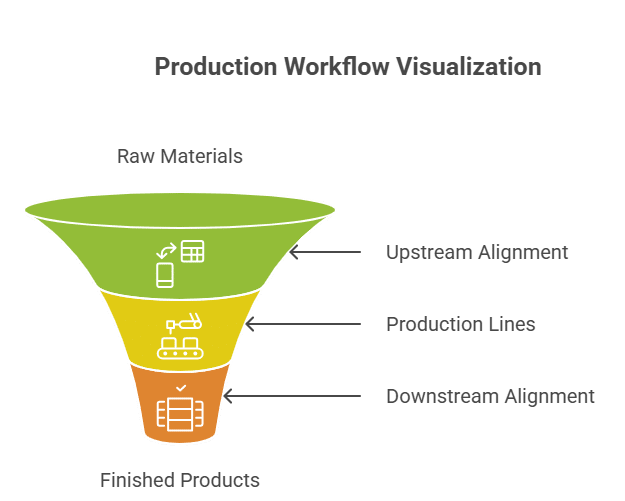
The problem is rarely that a company has too many systems. It’s that no one is certain which system owns which piece of the truth. ERP handles orders and materials, MES tracks real-time execution, and APS coordinates capacity and sequencing between them.
When those systems fall out of alignment, information slips through the cracks — implementations can lose weeks because job IDs, timestamps, or status flags don’t match between ERP and APS. Once those connections are clarified and validated, the schedule stabilizes almost overnight. This is exactly why integration matters, and why CAI PlanetTogether is built to connect cleanly with the ERP, MES, and planning systems already in place.
Knowing where data lives and who maintains it makes every step after it faster. You can’t schedule what you can’t define — and APS depends on those definitions being accurate and current.
Lesson 4 — Cultural Resistance: The Human Side of Smarter Scheduling
Standing up the software is rarely the hardest part. Implementing APS means rethinking how decisions get made and who makes them.
Schedulers often worry about handing control to automation — a fair concern. The reframe that works: APS is power steering, not autopilot. It sharpens human judgment rather than replacing it. Once schedulers see the system amplifying their expertise instead of undercutting it, adoption tends to follow on its own.
Cultural readiness means leadership sponsors the project from the top while schedulers take ownership from the bottom. Both matter. The moment either side feels shut out, trust erodes and progress slows.
Lesson 5 — Continuous Improvement: Progress Over Perfection
APS readiness isn’t a milestone you clear once. It’s a habit. One discipline that works: if APS flags an issue, fix it within 24 hours. That single rule builds a continuous-improvement loop where every fix becomes a chance to learn, document, and strengthen the process.
The strongest teams don’t chase perfection. They chase visibility and accountability. Adopt that mindset and APS stops being a one-time software project and becomes the framework for long-term performance.
Lesson 6 — KPI Alignment: Speaking the Same Language
Executives think in outcomes — margin, throughput, on-time delivery. Schedulers think in mechanics — run time, setup, machine utilization. The gap between those two views is where progress stalls.
APS bridges it. When a leadership goal like “increase throughput by 5%” translates into an operational target like “reduce bottleneck idle time by 10%,” both sides measure success in the same terms. Shared metrics unify the conversation: planners, schedulers, and leadership look at the same data from different angles and see the same story. Trust and alignment follow.
An Ecosystem, Not an Island
Scheduling doesn’t improve in isolation. The manufacturers who get the most from APS treat it as one connected layer in a larger operations stack — linked to the ERP that carries orders and materials, the MES that reports execution, and the supply chain planning tools that shape demand. As part of CAI Software, CAI PlanetTogether is designed to fit that reality, with integrations across platforms like Kinaxis, NetSuite, AVEVA, Shiftboard, John Galt, and Aptean Ross. The result is scheduling that reinforces the systems around it rather than competing with them.
The Cost of Waiting
Companies that keep scheduling through spreadsheets and manual tools tend to underestimate the cost. It shows up as hidden overtime, lost throughput, late shipments, and customers walking away from missed commitments. In our experience across clients and partners, the gap often runs to roughly 3% to 7% of annual revenue. Knowing there’s a better way to schedule and choosing not to act is a decision with a real price tag.
Continue the Conversation at the 2026 Manufacturing Scheduling Summit
The best scheduling conversations still happen in person. Join CAI PlanetTogether at the 2026 Manufacturing Scheduling Summit, September 22–23 in Chicago, alongside manufacturing leaders and scheduling experts for two days of practical discussion, real-world case studies, and ideas you can bring straight back to the floor. If any of the six lessons above hit close to home, this is where you’ll find the people who have worked through them.
Planning to attend? Learn more and claim your CAI PlanetTogether registration discount.

Where to Start
You don’t have to transform everything at once. Start by seeing clearly. Document where your data actually lives, confirm how your process actually flows, and have the honest conversations about cultural readiness.
For a structured way in, download the free APS Readiness E-Book — a practical, vendor-agnostic guide for any manufacturer working out how to implement APS successfully. Or, when you’re ready to see what CAI PlanetTogether can do with your data and your process, talk with our team.
Frequently Asked Questions
What is advanced planning and scheduling (APS)? APS is software that generates a realistic, capacity-aware production schedule by coordinating orders, materials, and machine availability across the systems a manufacturer already runs. Unlike basic ERP scheduling, it accounts for finite capacity, sequencing, setup, and real constraints on the floor.
How is APS different from ERP scheduling? ERP owns orders and materials but generally assumes infinite capacity. APS layers on the constraints ERP ignores — machine limits, changeovers, and sequencing — to produce a schedule the floor can actually execute. The two work best connected, with APS coordinating between ERP and MES.
How do you know if you’re ready for APS? Readiness comes down to three questions: is your data trustworthy, is your real process documented, and is your team culturally prepared for the change? A structured assessment like the APS Readiness E-Book helps manufacturers evaluate all three before implementation.
In this post, we’ll break down the key differences between cloud and on-premise ERP software, explore the benefits and limitations of each, and discuss when modernizing your ERP makes sense—and when it may not.